Hosted by The Plant Initiative
Free - Optional Donation Recommended
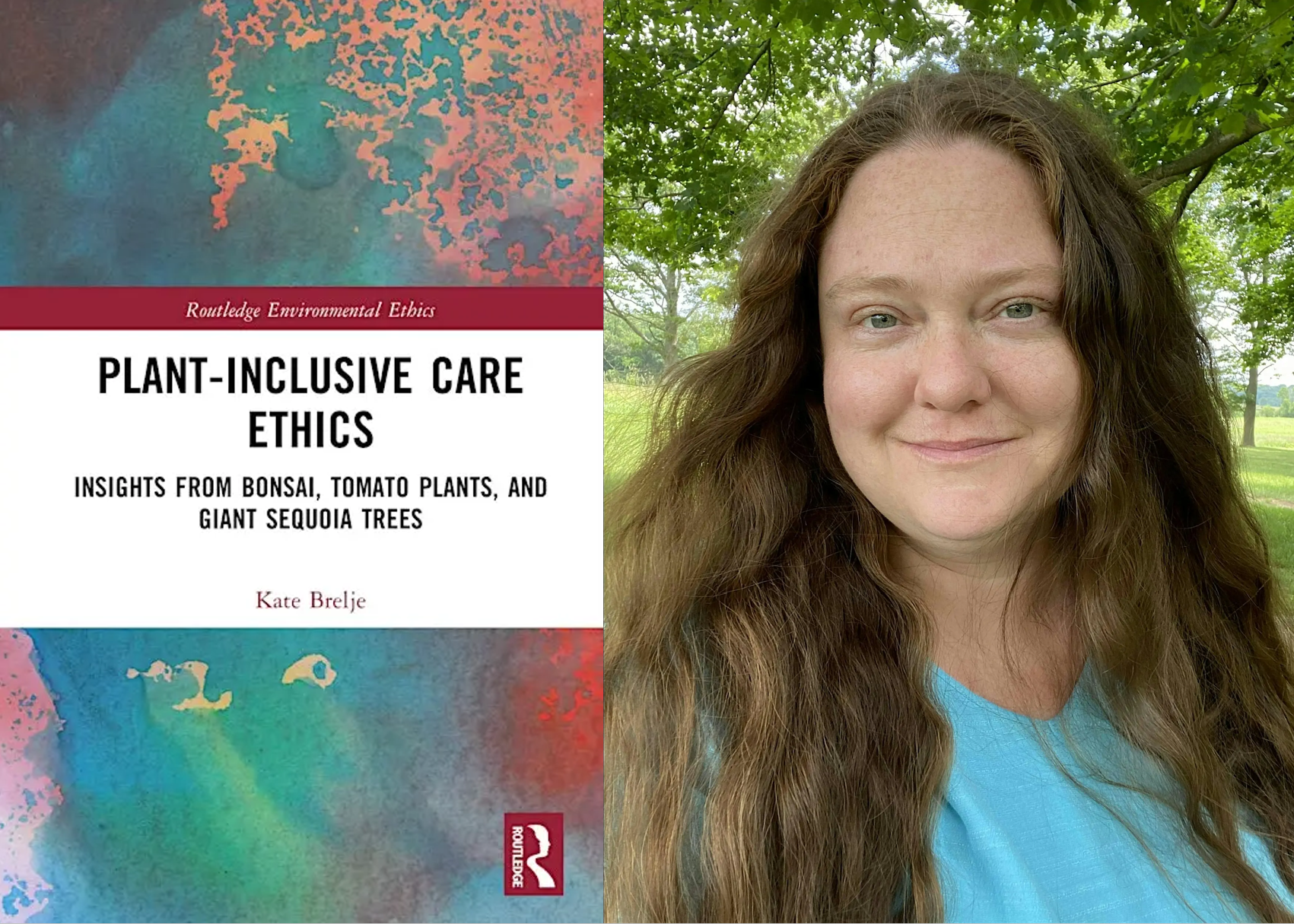
Philosopher Kate Brelje will be talking about her new book Plant-Inclusive Care Ethics: Insights from Bonsai, Tomato Plants, and Giant Sequoia Trees, a facinating exploration of the moral value in plants and their capabilities for caring relationships.
The conversation will introduce Dr. Brelje's research on plant ethics and explore questions such as: Why should people care about plants? What can we learn about people's connections with bonsai, tomato plants, and giant sequoias? What does it take for a plant to succeed? To what degree are humans and plants interdependent? How do or should humans and plants respond to each other? How can one use a plant for food or other purposes and still care about the plant?
The conversation will be moderated by plant studies scholar Dr. Laura Pustarfi, a Plant Initiative board member.
There will be time for questions from the audience following the discussion. This free program will be livestreamed with a link to be sent to participants before the event and will also be recorded and available for viewing online afterwards.
--------------------------------------------------------------------------------------------
For a 30% discount on online purchase of the hard copy of the book or the e-book from the publisher, visit www.routledge.com, add the book title to your cart, and enter discount code ADC26 at checkout .
About Kate Brelje
Kate Brelje is an assistant professor of Philosophy at St. Bonaventure University in New York. A member of the Networking with Plants in the Anthropocene steering committee and member of the Plant Initiative's Board of Directors, she is an avid plant enthusiast. She is also serves as the philosopher in residence for the Veterinary Association for Farm Animal Welfare (VAFAW) and is the showrunner for Networking with Plants in the Anthropocene's podcast (soundcloud.com/networking-with-plants). Having studied aesthetics and philosophy of mind, she settled into feminist philosophy and environmental ethics in her doctoral research.
Kate Brelje's web site is https://katebrelje.wordpress.com/ .
About Plant-Inclusive Care Ethics: Insights from Bonsai, Tomato Plants, and Giant Sequoia Trees (Routledge 2026)
By exploring the moral value in plants and their capabilities for caring relationships, the book demonstrates that this type of care is already in practice and discusses three case studies of human-plant contexts: bonsai, tomato plants, and giant sequoias. Brelje reasons that plants should be included in care ethics based on the human carers and plant cared-fors ability to meet the core requirements of caring relationship: carers’ valuing-attitudes for plants, caring affect towards plants, human-plant interdependency, responsive interactivity between humans and plants, and plant success conditions. This theory is applied to real life caring relationships between human carers and plant cared-fors through interviews with bonsai practitioners, tomato plant farmers, native caretakers, and parks personnel, providing sketches of contemporary human-plant care relationships. Each case offers context-relevant challenges based on plant type and use, aesthetic, and consumption, while highlighting the common ethical care patterns.
Learn more about the book here.
--------------------------------------------------------------------------------------------
For a 30% discount on online purchase of the hard copy of the book or the e-book from the publisher, visit www.routledge.com, add the book title to your cart, and enter discount code ADC26 at checkout .